Carbide Plate
1. Carbide plate
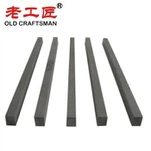
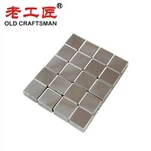
Carbide plate is also known as carbide plate, carbide sheet. It is one of the many materials of carbide. It is named as its rectangular plate (or square).
The carbide plate is mainly made of WC powder and Co cobalt mixed by metallurgical methods through powdering, ball milling, pressing, and low-pressure sintering. The product body has good compactness, no holes, no blisters, and high dimensional precision (blank tolerance control In the range of ±2.2~±2.2, the precision blank is controlled at ±0.01), the machining allowance is small, which can effectively improve your production efficiency and greatly reduce the processing cost.
Common carbides are tungsten carbide, titanium carbide, niobium carbide and vanadium carbide, etc., which can make the carbide have high hardness and high wear resistance. The cementing agent of carbide is mainly metallic cobalt or metallic nickel, etc., which can ensure that the carbide has certain strength and toughness.
The main alloy components of the carbide plate are WC and Co. The content of WC and Co in the carbide plate for different purposes is not the same, and the application range is extremely wide.
2. Production process
Pulverizing → formula according to application requirements → wet milling → mixing → crushing → drying → sieving → adding forming agent → re-drying → sieving to obtain a mixture → granulating → pressing → forming → sintering → forming (blank) →Flaw inspection→Packing→Warehousing.
3. Material performance characteristics of carbide plate
Carbide plates have excellent red hardness, high hardness, good wear resistance, high elastic modulus, high compressive strength, good chemical stability (acid, alkali, high temperature oxidation resistance), low impact toughness, and low expansion coefficient , Thermal conductivity and electrical conductivity are similar to those of iron and its alloys.