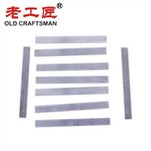
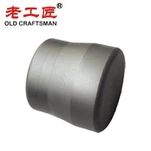
Ladle bricks, iron-clad bricks, silicon carbide and other special-shaped products are the most widely used refractory products in steelmaking enterprises. Since the raw materials used are high-hardness and high-strength alumina and silicon carbide particles, the wear of the forming mold is very serious.
Cemented carbide itself has the characteristics of high strength, high hardness and high temperature resistance, so it is very important to develop suitable carbide grade to achieve the best strength, toughness and wear resistance. What's more, as the material of the refractory brick mold, in addition to considering the characteristics of the cemented carbide itself, it is also important to focus on the adhesion between the cemented carbide and the main structure of the steel plate.
In fact, in the past people used a monolithic structure, that is, the entire mold was made of cemented carbide. The advantage is that the processing technology is simple, but the structure cost is high. When the product is less than a certain thickness, it is easy to break and scrap. Therefore, the split structure, that is, the method of inlaying or bonding cemented carbide plates on the basis of steel plates, is adopted with a relatively complicated processing procedure.
ZZ Old Craftsman used vacuum welding when developing this product years ago. On the basis of the predecessors, the welding process has been improved, and the cemented carbide plates is more perfectly brazed on the steel structure body. As can be seen from our product pictures, the brazing gap is tight, very precise and beautiful, and the surface of the alloy block is very flat and smooth; in product testing and actual use, the service life and work efficiency of the refractory brick mold are greatly improved.
We know that the main reason that affects the number of molds is the difference in the degree of mold installation and the shape and size of the product, and the carbide grades we have developed have both wear resistance and high hardness. In addition, due to the low surface roughness of the cemented carbide mold and the small friction coefficient of the mold surface, it is not easy to spall during the process of brick exhaust and molding pressure.
Although the cost of cemented carbide as a refractory brick mold material is higher than that of traditional materials such as alloy steel, it is indeed a cost-effective and high-quality choice from the perspective of service lifespan. After all, the use of cemented carbide refractory brick molds greatly saves the time and labor cost of replacing molds, thereby shortening the molding cycle of refractory bricks and improving production efficiency.