Since the advent of cemented carbide as an important tool material and structural material in 1923, it has a history of nearly a hundred years.
The Beginning of Tungsten Carbide
At the end of the 19th century, in order to find new materials to replace high-speed steel, in order to further increase the metal cutting speed, reduce the processing cost and solve the problems of drawing tungsten wire of the light bulb, the research on cemented carbide began.
The early work mainly focused on the research of various refractory compounds, especially tungsten carbide. Since 1983, German scientists have produced tungsten carbide by heating tungsten trioxide and sugar together to high temperature in an electric furnace and tried to use its high melting point, high hardness, and other characteristics to produce wire drawing dies, etc., in order to replace diamond materials. However, due to the high brittleness, easy cracking, and low toughness of tungsten carbide, it has not been used in industry.
Development of WC-Co Cemented Carbide
In the 1920s, German scientist Karl Schroter found that pure tungsten carbide could not adapt to the severe stress changes in the drawing process. Only by adding low melting point metal to WC can the rough embryo have some toughness. After a year of hard work, Schroter first proposed the method of powder metallurgy in 1923, that is, tungsten carbide is mixed with a small amount of iron group metals (iron, nickel, cobalt), and then pressed and formed at a temperature higher than 1300 ° C. Sintered in hydrogen to produce hard alloy knives patent. The process he proposed in the patent is essentially the WC-Co cemented carbide production process that many factories still use today. By 1926, Germany's Kmpp company began mass production of WC-Co cemented carbide, which has high strength, high hardness, high elastic modulus, wear resistance, corrosion resistance, low thermal expansion coefficient and high chemical stability, and was later used. Named WIDIA (similar to diamond), it is sold on the market. Subsequently, the United States, Austria, Sweden, Japan, the former Soviet Union and some other countries also produced cemented carbide, so the production technology of cemented carbide began to develop rapidly.
At first, people thought that WC-Co cemented carbide could process various materials, but it was soon discovered that this alloy was easily damaged by diffusion wear when machining steel. In 1929, German scientists found that a solid solution composed of more than two carbides was more superior than a single carbide as the matrix of cemented carbide, and proposed a patent for the application of solid solution. In the same year, the Krupp company in Germany began to produce WC-TiC-Co alloys. In 1932, the United States also developed the WC-TiC-Co alloy according to the patent of Schroter and colleagues. Soon scientists developed the WC-TiC-TaC-Co alloy, so that the problem of steel processing can be properly solved.
Development of Carbide Indexable Cutting Tools
After World War II, due to the improvement of the power and rigidity of the lathe, the cutting amount increased, people began to study indexable carbide tools. The use of this tool does not require welding, the tool head can be replaced at any time, and the tool holder can be used for a long time. Its economic effect is very significant, and it is one of the major advances in the cemented carbide industry. Since the introduction and adoption of indexable inserts in December 1953, their popularization and application have been very unsure. At present, cemented carbide manufacturers all over the world are producing such inserts. In the 1960s, the West German Krupp company successfully valued coated cemented carbide. Its original intention was another major progress in cemented carbide production technology. This chemical vapor deposition method was used to make ordinary cemented carbide inserts. Coated inserts obtained by coating a thin layer of hard compounds (such as TiC, TiN, etc.) can increase the life of uncoated carbide inserts several times when cutting cast iron and steel under high speed, and cutting The speed can be increased by about 25%~30%, so it soon gained a wide range of industrial applications. About half of the indexable tools sold in the world today use coated carbide.
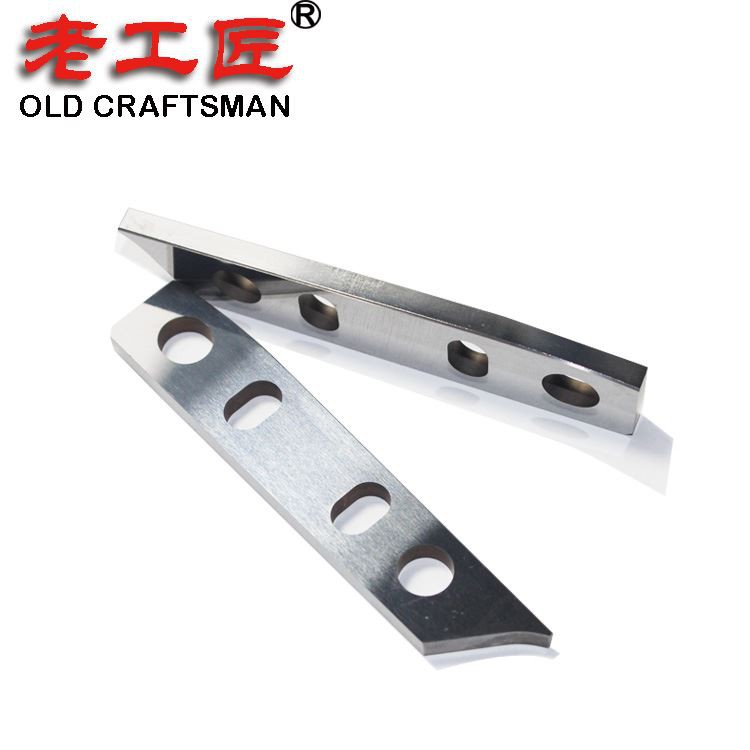
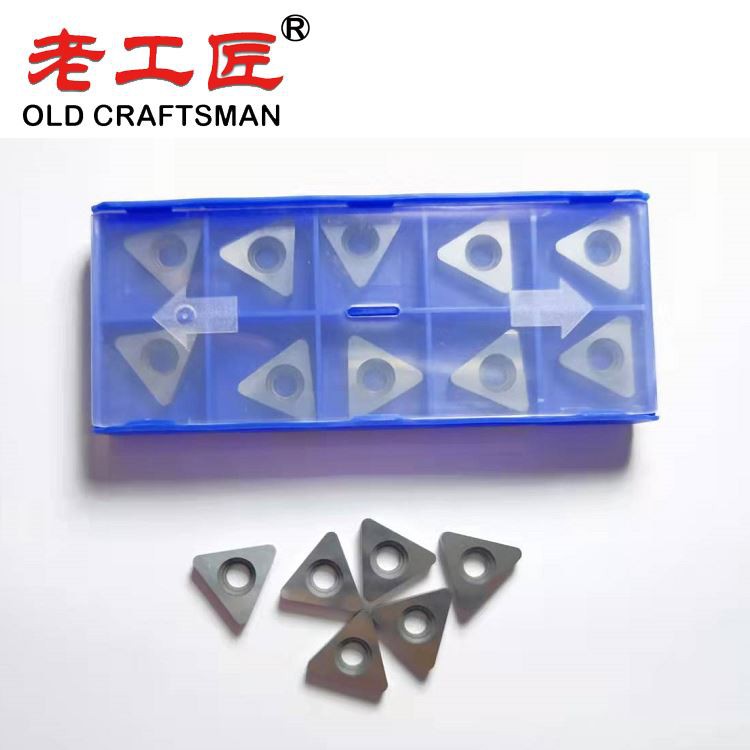
PS: Below are the custom cemented carbide shims, carbide blade, and carbide inserts we manufactured. From hard alloy powder to formed hard metal, we provide custom and standard design, and production services.